A space where you can truly be yourself.
Psychotherapy & Psychoanalysis Practice in Vienna 1170
Sometimes we feel like we’re living someone else’s life. Stuck in the same patterns, repeating the same relationship dynamics, unable to understand why anxiety or emptiness keeps creeping in. Psychoanalysis doesn’t just alleviate the symptoms — it helps you understand their root cause. I invite you to a gentle, deep exploration of yourself.
I work psychoanalytically — together we get to the root of things, rather than just easing symptoms.
In my work, I draw from classical Freudian psychoanalysis, Object Relations theory, and contemporary psychoanalytic approaches. But behind every theoretical concept, there’s always a real person — with their unique history, pain, struggles, and hopes.

I’m Here to Help You Hear Yourself
I’m Yelena Gielessen, a practicing psychoanalytic psychotherapist. I help adults navigate anxiety, relationship struggles, loss, and find inner support. My work is grounded in depth psychology, psychoanalytic theory, and my personal analysis.
My journey into this profession began not only with textbooks. It began with my own analysis. I spent years on the couch as a client, so I know firsthand how terrifying that first step can be. I understand how difficult it is to trust a stranger — and how crucial it is to feel that the person sitting across from you can hold any emotion you bring: anger, tears, silence, confusion, or even rage.
“Those who understand themselves gain the freedom to act differently.”
Training & Qualifications
Therapy in the language you feel in.
The most important things are easiest to say in your own mother tongue. I offer sessions in English and Russian.
You are warmly welcome. We work together, at your own pace, in fluent English, wherever you are in the world.
Добро пожаловать. Консультации и психоанализ на русском языке — в тёплой и доверительной атмосфере.
What Is Psychoanalytic Psychotherapy and How Does It Work?
Psychoanalytic psychotherapy is not simply “having a heart-to-heart,” and it is not about being given advice. It’s a deep, collaborative process that allows us to explore the hidden corners of your mind — the parts that usually stay out of awareness. Together, we’ll listen not only to what you say, but also to what happens between the lines: slips of the tongue, dreams, fantasies, and even your feelings toward me.
Why does this matter?
Many of our struggles and repetitive patterns don’t come from a “bad personality” — they come from unconscious templates laid down in childhood. We don’t rewrite the past. We give it a space to be seen, felt, understood and lived. And that’s where real freedom begins.
Not only in crisis
Helpful with burdens such as anxieties, low moods or upheavals, and equally with the wish to grow further and understand yourself better.
A safe space
What you confide in me stays between us. In a confidential atmosphere free of judgement, the trust grows step by step that lets you give space to even the most difficult themes.
How we can work together
The first step is often the hardest. In a free first interview, we calmly explore what you need and which form of support suits you.
Individual therapy
A protected space for anxieties, crises and reorientation, psychoanalytically grounded, at your own pace. The most common form of my work.
More on psychoanalysisCouples therapy
Understanding what stands between you and finding your way back into conversation, psychoanalytically oriented support for couples.
More on couples therapyGroup therapy
Experiencing together with others that you are not alone with what you carry, psychoanalytically oriented work in a protected group. We are happy to discuss the details in a first interview.
Ask about group therapyConfidential sessions by video, comfortably from home, via WhatsApp video call or Jitsi Meet.
Things you do not have to face alone.
What Happens in Sessions
Before you decide on anything, we get to know each other, entirely without pressure.
Psychotherapeutic First Interview
FreeThe first consultation lasts 50 minutes. Think of it as an initial exploration. We meet, you tell me what brought you here, what’s troubling you. I’ll ask questions to better understand your situation and your goals. There’s no commitment — you’re simply coming to see if this approach and this therapist feel right for you.
Ongoing Sessions
Classical psychoanalysis usually runs at 3–4 sessions per week, but I also provide psychoanalytic psychotherapy on a 1–2 sessions per week basis. Together we’ll determine the right frequency for you — depending on your goals, how deep you want to go, and your real-life schedule. Each session is 50 minutes long, and if we feel that extra time is needed, we can switch to a double session.
What Happens Over Time
Gradually, you’ll notice that your old automatic reactions no longer run the show. You’ll develop the ability to choose rather than simply react. You’ll learn to tolerate difficult emotions without collapsing or destroying your relationships.
What sets me apart.
I am convinced that you already carry the answers within you. I do not give advice, but create a judgement-free space with you in which you encounter yourself, at your own pace.
Psychotherapy is a matter of trust, which is why I work transparently. I am in advanced training (specialising in psychoanalysis) and work as a “psychotherapist in training under supervision”, closely accompanied and engaged in my own self-experience.
With me you do not have to gloss over anything or perform. You are accepted as you are.
The solution already lies within you. I accompany you in finding it, rather than prescribing it to you.
Working under the professional authorisation of my training institution, on the way to my own licence.
Everything discussed is subject to confidentiality and stays between us.
Answers to the most important questions.
How does the free first interview work?
+ −
The psychotherapeutic first interview is free and without obligation, lasts 50 minutes and is mainly about getting to know each other. In your own time, you tell me what brought you here and what is on your mind, I ask questions to better understand your situation and your goals, and I explain how I work.
Afterwards you decide calmly whether this approach and this therapist feel right for you, with no obligation to begin therapy. The easiest way to arrange your appointment is via the contact form or by WhatsApp.
When should I seek professional help?
+ −
A simple rule of thumb: if something weighs on you over a longer period, keeps going round in your mind or affects your everyday life, your sleep or your relationships, that is a good moment to seek support. You do not have to be “ill enough” for that.
Common reasons are, for example:
- persistent anxiety, panic or inner restlessness
- depressive moods, lack of drive or exhaustion
- life crises, upheavals and losses
- recurring conflicts in relationship and family
- questions of self-worth, identity and meaning
In my experience it is worth looking sooner rather than waiting until the pressure becomes too great.
How do I know a therapist is right for me?
+ −
Studies, and my own experience, show the same thing: the most important factor for a successful therapy is the relationship between you and your therapist, not the method alone.
When you first meet, notice whether you feel understood, safe and taken seriously: do you dare to speak openly? Do you have the feeling that you do not have to gloss over anything?
That is exactly what the free first interview is for. You sense calmly whether it feels right for you before you commit. Write to me, and we will get to know each other with no obligation.
What is the difference between psychotherapy and psychoanalysis?
+ −
In short: psychoanalysis is a particular approach within psychotherapy. “Psychotherapy” is the umbrella term for all recognised methods that treat emotional difficulties through conversation.
Psychoanalytically oriented psychotherapy looks not only at the symptom, but at what lies beneath it: unconscious patterns, early imprints and recurring relationship experiences. This brings not only quick relief, but a deeper understanding of yourself.
You can read more about how I work on the Psychoanalytic psychotherapy page.
What is the difference between a psychologist, psychotherapist and psychiatrist?
+ −
These three terms are often confused, but they mean different things:
- Psychiatrists are medical doctors and may prescribe medication. They treat above all the medical side of mental illness.
- Psychologists have studied psychology. Clinical psychologists make diagnoses, among other things, but do not automatically provide psychotherapy.
- Psychotherapy is the actual treatment of emotional difficulties through conversation, using a recognised method such as psychoanalysis.
As a psychotherapist in training under supervision, I accompany you in a psychoanalytically oriented way through conversation, without medication. More about this on the Psychoanalytic psychotherapy page.
How long does psychotherapy take?
+ −
There is no blanket answer, because it depends entirely on your concern. Some issues can be clarified in a few sessions, other processes need more time.
A session lasts 50 minutes and usually takes place once or twice a week. How often and for how long we meet, we decide together and adjust as we go. You set the pace and do not enter into any long-term obligation.
Does health insurance cover psychotherapy?
+ −
In Austria, statutory health insurers usually do not cover psychotherapy in full. With independent elective therapists, however, a partial refund (subsidy) is often possible: you submit the invoice to your insurer and receive part of it back.
Your respective insurer is responsible, for example the ÖGK (Austrian Health Insurance Fund), the BVAEB (for public servants, railways and mining) or the SVS (for the self-employed). The amount and the requirements of the partial refund differ from insurer to insurer.
Whether a partial refund applies in your case is best clarified directly with your health insurer. Everything else we discuss calmly in person in the free, no-obligation first interview.
Is online therapy just as effective?
+ −
For many people, yes. Online therapy by video can be just as helpful as meeting in person, because what matters is the trusting relationship, not the location.
You save the journey, stay flexible and speak from your familiar surroundings, which makes it easier for many people to open up. Whether online or at the practice in 1170 Vienna suits you better, we find out together. You can read all about how it works on the Online therapy page.
In which languages do you offer therapy?
+ −
I offer therapy in English and Russian. Russian is my mother tongue, so even subtle nuances and feelings have their place.
Especially if you live in Vienna but prefer to discuss personal matters in your familiar language, you are in the right place with me, in person in 1170 Vienna or online.
Is psychotherapy subject to confidentiality?
+ −
Yes. Everything you confide in me, I treat in strict confidence. This confidentiality is one of the most important foundations of any psychotherapy, because only then can a truly protected space arise.
As I work in training under supervision, I discuss my work in anonymised form with experienced supervisors, who are likewise bound by confidentiality. Your identity remains protected throughout.
The first step often takes courage.
No pressure, no preparation. Write to me by WhatsApp, email or the form, and I will reply to you personally.
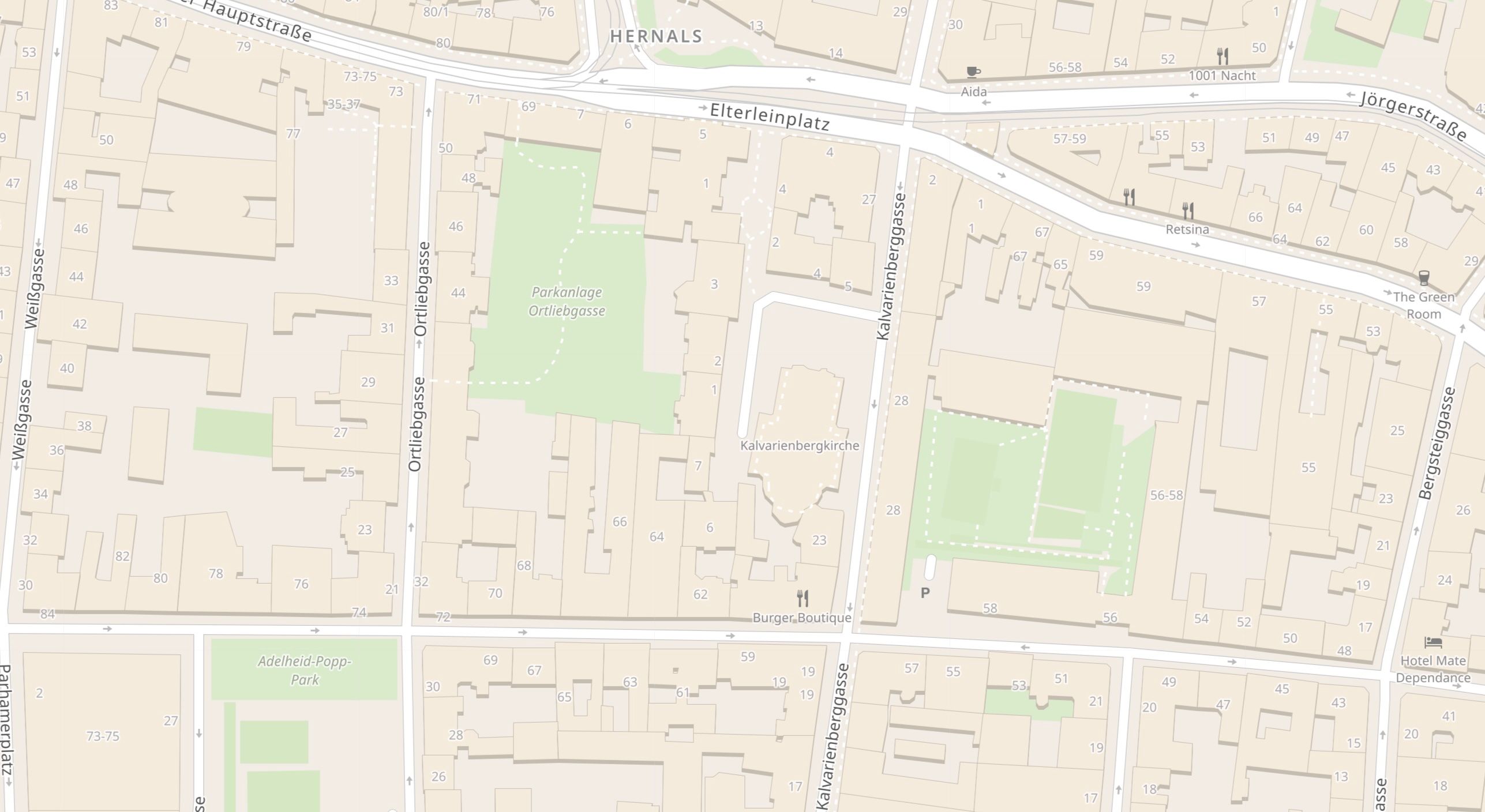
Late evening appointments make therapy possible alongside work, with Saturdays and Sundays on request too.